
An Interview with Howard McWilliam
Award-winning illustrator of the I Need My Monster
and When a Dragon Moves In series

When did you find out that you have a gift for illustrating?
I wanted to be an artist of some kind from a very young age. My mum claims I was drawing with perspective at age four, but I think she may be exaggerating! I won a couple of national UK cartooning competitions between the ages of 12 and 15, and was always super keen in school art classes and then at art college. I simply took a hiatus for a few years to do magazine journalism.

You left your career as a financial magazine editor and journalist in order to focus on your work as an artist. Why did you decide to make such a big step? Did you have any fears/doubts?
By the time I quit the day job in 2005, I’d picked up quite a few clients for my illustration work — enough to know that I could at least pay basic bills through the artwork. I was working into the evenings and weekends so much that I felt the time had come to just concentrate on illustration. Even so, it was still scary to cut myself off from the salary and be a freelancer. There’s always the fear that the work will dry up tomorrow. But that fear has been unfounded so far… 16 years and counting!
What children’s books have made an impact on your style as an artist?
I adored the work of Quentin Blake as a child, and I always strive to capture the sense of heart in his pictures, though my style is completely different. My style has perhaps been most influenced by the kind of CGI animation pioneered by the likes of Pixar, informing my preoccupation with three-dimensional form, lighting, and texture. When deadlines are looming, I sometimes wish I’d made my style a bit more simple and less detailed — more like Quentin Blake’s! — but I hope readers get some enjoyment from it.

Where do you get your inspiration from? Which painters or illustrators inspire you?
There are so many illustrators out there doing fabulous work, it’s hard to pick. Carter Goodrich produces such beautiful watercolour illustrations overbrimming with a sense of character, I’m always eager (and envious) to see anything new he’s done. I love Adam Stower’s illustration (he’s my colleague of sorts, as we take turns doing MoneyWeek magazine’s cover here in the UK). He has such a seemingly effortless gift for line and personality, his children’s books are simply perfect. I think I am also still inspired by Bill Watterson’s Calvin & Hobbes all these years later — I absorbed everything about that superlative comic strip like a sponge, and I think it can still subconsciously drip out in my artwork.

How important is it to have a recognizable style as an artist? How did your style develop over the years?
I’ve never thought too self-consciously about style, but rather just drawn and painted how my instinct takes me. I sometimes wish I were more obviously “stylised” and less literal in my portrayal of things, but I always tend to veer back towards a three-dimensional sense of reality, no matter how I try. My style does vary somewhat for different projects, however. Half of my work is illustrating magazine covers, with a lot of political caricature, plus I used to do a simpler, more cartoonish style for newspaper work. Every now and then, I’m asked to emulate a famous artist or painting style — anything from Seurat’s pointillism to ancient Greek vases — and I find this tremendous fun, like an actor inhabiting another person for a role.
What’s one thing an illustrator must keep in mind when illustrating children’s book?
I think the eye has to be led naturally around the page, especially with the flow of text, and you must keep the reader’s interest from the start to the end with as much variety, fun, and movement as possible. A great limitation of the I Need My Monster books, for example, is that it’s mostly set in one location, Ethan’s bedroom. I try to bring as much visual variation to this as possible by changing the viewing angle every time, and giving the sense of each monster providing their own coloured light to the scene.


How/Why did you decide to illustrate the book series I Need My Monster? Did you stumble upon any particular challenges? Do you have a favourite monster from the series?
It was the first children’s book project I was offered, based on a picture of a monster I’d done for a magazine article, which I subsequently posted on a children’s illustration portfolio. I was overjoyed to get the opportunity — who wouldn’t leap at the chance to draw a whole book worth of monsters? The challenge of setting mentioned above has been the most significant one, plus at the outset we wrestled with the idea of how the monsters would arrive in the room (would there be a world under Ethan’s bed that we would occasionally see, for example?) In the end, simplest worked best… emerging from the pitch black shadow under his bed, with the rest left to imagination. My favourite monster to draw has to be Mack with his long tongue!
Any projects coming up that you would like to share with us?
I’m currently illustrating a children’s book that I’ve written myself, due for publication with Flashlight Press in 2023, which I’m very excited about. I’d better not say any more than that!
Check out these Flashlight Press books illustrated by Howard McWilliam


This interview was given by Howard McWilliam to promote the Bulgarian edition of Hey, That’s MY Monster! published by Marmot Books.

#EarthDay2020
Although the Corona virus prevents us from participating in clean-ups this year, learning how to preserve our planet is of utmost importance.
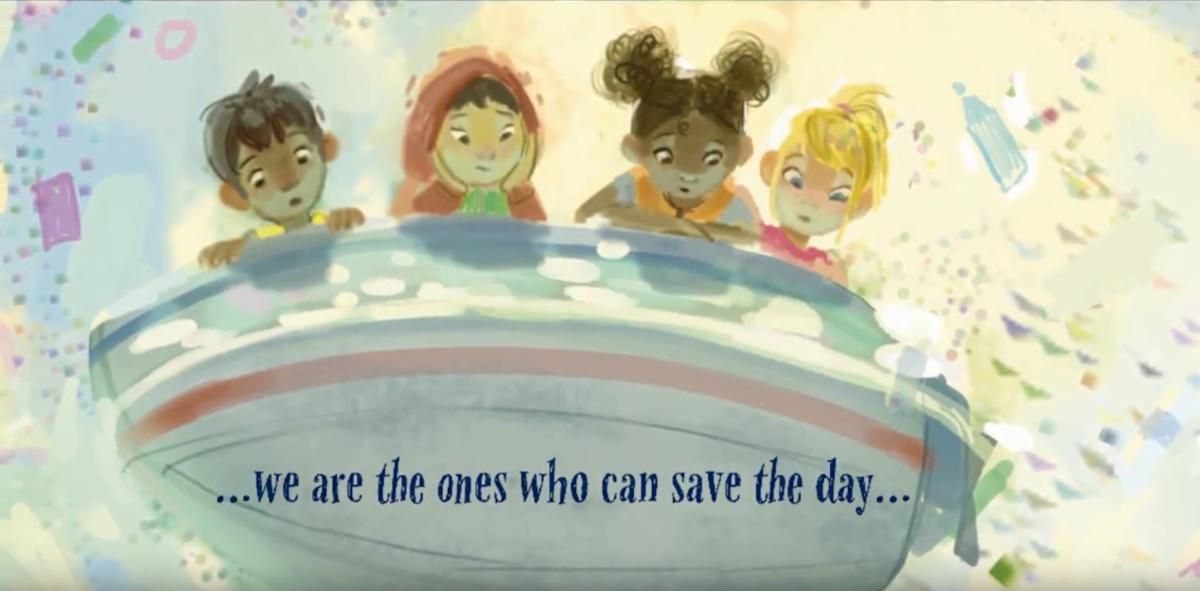
This Earth Day 2020, while you stay safely at home, please join these four children who discover The Mess That We Made.


“…an important addition to environmental awareness for the very young, striking a good balance between current reality and hope the future.”–Sallie Lowenstein Lion Stone Books
“…a brilliant way to help start a conversation about ocean pollution and encourage such needed change in the world.”–Christa McGrathEdwards Book Club
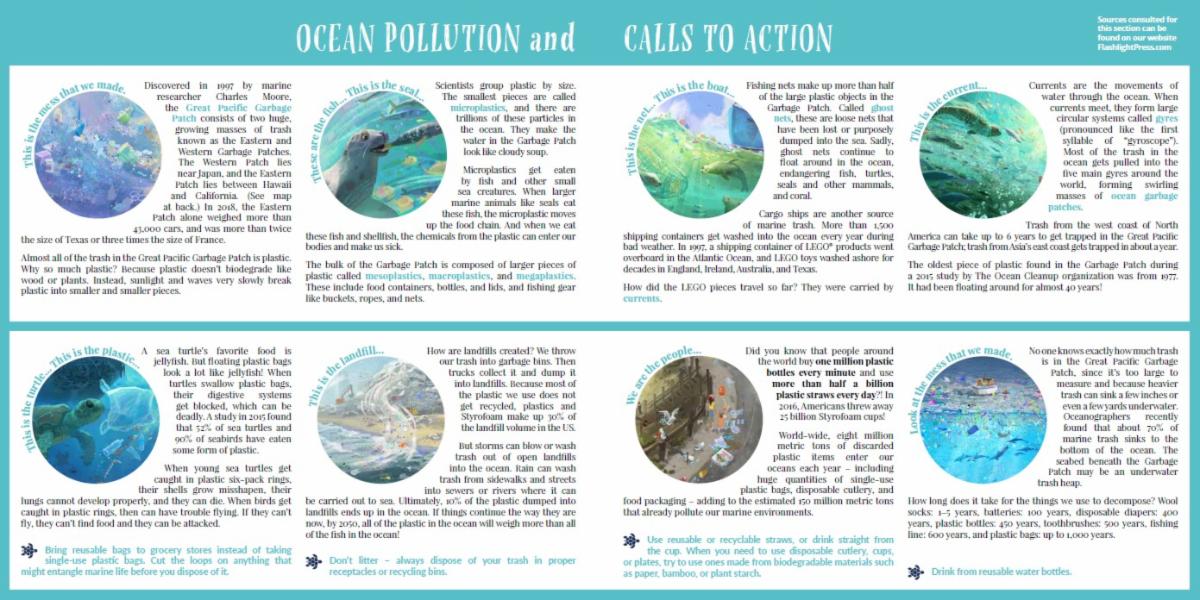
The Mess That We Made includes facts about ocean pollution, a map of ocean garbage patches, and kid-friendly calls-to-action.
Enjoy listening to author Michelle Lord read The Mess That We Made

Fly, Dragon, Fly!
Guest blogger: Jodi Moore
Post originally appeared on YA Outside the Lines, a blog co-authored by YA writers.
I’m a huge fan of the Butterfly Effect. Not only of the movie, but of the theory alleging that one tiny action in a system can inspire huge effects elsewhere, or as the analogy states: one flap of a butterfly’s wing in Brazil can result in a tornado in Texas.

Not that I want a tornado in Texas. Hmm. Maybe I believe in the Kindness Effect. Where one act of kindness can inspire large change…
But I digress. This month, we’re questioning whether or not we’d change anything on the journey to publishing our first book.
To which I answer, absolutely not.
I wouldn’t change the fact my husband and I were in the throes of Empty Nest. Because hard as it is to let go, it was time to let our little birdies fly. And their accomplishments, spirit and drive continue to fill our hearts.
I wouldn’t change the fact my husband brought their sand toys to the lake anyway, that Labor Day after they left for college. Because with the help of the other children on the beach, he built a castle. The castle that inspired When A Dragon Moves In.

I wouldn’t change the fact that although some renowned publishers (from the big six) insisted I determine whether the dragon in the story was real or imaginary before the book could ever be published, I stuck to my original of idea of wanting the reader to decide. Because finally, one editor, my editor, Shari Dash Greenspan of Flashlight Press, “got it.” And then she gave the manuscript to brilliant illustrator Howard McWilliam, who took the idea and elevated it to heights I’d never even imagined.
If I’d changed anything along the way, When A Dragon Moves In may never have seen the light of day. Two more Dragons have followed: When A Dragon Moves In Again and (the newly released) I Love My Dragon. Would they have been “born?”
Look, all of us wish at times we’d made different decisions. Especially when things don’t turn out the way we’d hoped.
But When A Dragon Moves In turned out better than I’d hoped. So, would I change anything? Would I restrain one flap of that butterfly, er, Dragon?
Simply put, nope.
Mark your calendars for #BNStorytime!
Visit your local Barnes and Noble this Saturday, September 28, 2019, at 11 am for their Storytime and Activities event featuring How I Met My Monster!

Click here to find a B&N store near you!
Happy #NationalMonsterDay!
Celebrate by welcoming the newest member of our Monster family: “Are You My Monster?” – a board book companion for babies and toddlers!
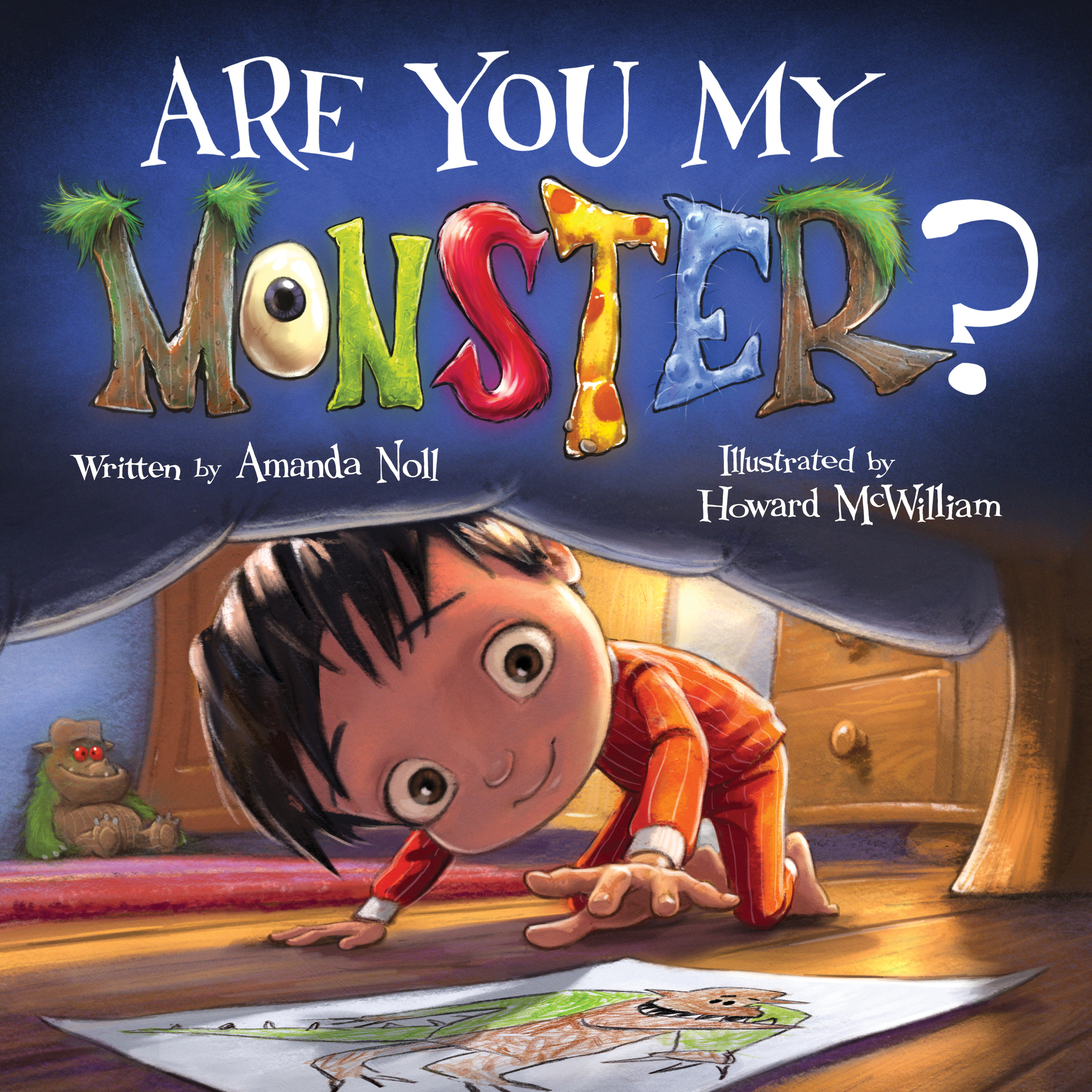
Help Ethan compare his drawing to an assortment of amusing monsters. Do the colors match? Are their tails long or short? Are their nails pointy or round? Are their teeth big or small? Children will be thrilled when Ethan finds the perfect match – which turns out to be his beloved stuffed monster toy – just in time for bed.
“Little ones will enjoy the parade of silly creatures…while also learning colors and matching.The sweet ending shows that even those with sharp teeth and scratchy claws can be cuddly,turning the monster-under-the-bed trope on its head.” – School Library Journal
An author’s thoughts from the ALA Midwinter Conference
Guest blogger: Amanda Noll, author of I Need My Monster and Hey, That’s MY Monster! and two more upcoming monster books!

In January, I had the unique opportunity to participate as an author at the ALA Midwinter Conference in Seattle, Washington, The number of vendors and professionals was staggering, and the whole experience was tremendous. I was hosted by IPG (Independent Publishers Group), the awesome, hardworking team who distribute my books and the entire Flashlight Press line to bookstores.

Librarians began lining up even before it was time for me to start autographing the free copies, and that line didn’t end until we ran out of books, all 100 of them! I’ve never had people queue up to meet me; I almost felt famous! I credit IPG for creating the buzz: they promoted my signing front and center at the Friday night opening session, and that’s when the excitement started to build. Cynthia and the rest of the IPG team kept the line moving and made sure books were ready for the enthusiastic librarians awaiting them.

It was thrilling to be at an event where peers and professionals knew and loved my books, and were excited to meet me. I connected with many local librarians, and had a chance to greet and speak with librarians from as far as Brazil and Asia, and from all around the world.
The librarians shared countless stories of reading my books to their young library patrons or students, and to their own children at bedtime. They told me they were absolutely thrilled to see the upcoming board book Are You My Monster (July 2019) as well as the upcoming picture book prequel, How I Met My Monster (October 2019). Flashlight Press prepared gorgeous sell sheets, which the librarians eagerly snatched up.
Signing my books at an ALA conference was a defining moment in my journey as an author. I’m grateful that this milestone can now be checked off my bucket list.


Amanda’s monster books are available through IPG, Barnes & Noble, Amazon, and your local bookseller.
My Long Journey to Becoming a Published Children’s Book Author
Written by Jason Lefebvre for Kids’ BookBuzz

My first attempt at writing a picture book came in 1998.
I thought the story was amazing. It wasn’t.
Fortunately, I was twenty-two years old, I had just completed my Bachelor’s degree in English, and I knew everything. I spent the next year of my life making all the wrong moves, trying to get my story published. I submitted on my own to large houses that only accept agented materials, wrote stories that I labeled as picture books, but were five thousand words long, and put together ridiculous query letters daring publishing houses to pass on what was sure to be the next great work in children’s literature.
Almost immediately, I had a need for actual employment. I began working in a preschool surrounded by picture books that were actually good and got a part-time job as a Children’s Librarian to make ends meet. Slowly, I began to realize something awful. My stories weren’t good, and my way of getting them published was even worse. The twenty-two-year-old who knew everything had become a twenty-three-year-old who knew nothing. It was the perfect starting point.
The next few years were spent taking the business of writing and publishing seriously. There were groups to join and books to read. I joined SCBWI or the Society of Children’s Book Writers and Illustrators. It was an amazing resource putting me in touch with people and organizations that understood from experience what it took to get something published. I read any picture book that I came across and borrowed from the limitless imaginations of the kids in my class and the ones that came through the library. If you want to write picture books, find a job working with children. It’s basically cheating.
While writing picture books was starting to make a little sense, the submission process was still frustrating. At a time when most houses still only accepted submissions via snail mail, a writer could wait six months to a year for a form letter response that basically said “thanks, but no thanks.” I had begun to receive a few personalized rejections. In the world of submissions, a “no” that is personalized is viewed as a positive, so I kept at it. Continue reading “My Long Journey to Becoming a Published Children’s Book Author”
Donate Your Fines
Maddi’s Fridge was featured in the Weekend Regional this week. Inspired by the book, the Brooks Public Library in Canada has a new program in place – accepting food donations in lieu of paying your library fines.
The program will continue until March 23rd, with each donated item acting as $1 of your fine.

Author Jason Lefebvre on his experience at the International Literacy Associaton
Too Much Glue author Jason Lefebvre was a guest at the International Literacy Association. Here’s what he said about his time at the conference:
 “To say that I was excited to be a part of the International Literacy Association conference in July 2017 would be an understatement. Not only did I get to visit beautiful Orlando, FL for the first time, I also got to meet the hardworking Go Teach team from Newell brands, the parent company of Elmer’s Glue.
When my book Too Much Glue was published by Flashlight Press in 2013, we were thrilled to see that kindergarten and 1st grade teachers LOVED using it as an intro to teaching glue skills. (“Glue raindrops, not puddles!”) Soon after, Elmer’s Teacher Club created a free literature-based teaching guide, The World of Glue, featuring Too Much Glue. Fast forward 4 years, and Go Teach graciously invited me to appear at their ILA booth to sign copies of Too Much Glue over the course of the three-day conference.

When I arrived, I saw that Go Teach/Elmer’s had brought 500 books for me to sign! Being a prototypical, pessimistic New Englander, I immediately thought, “Oh no! What if no one stops by to visit me?” The conference began on Saturday morning, and a few people trickled into line. The trickle turned into a steady flow, and my pessimism hit again. “Oh no!” I thought, “What if we don’t have enough books for all three days?” I quickly realized that the Go Teach team had planned well, and I could settle in and enjoy the experience.
Being surrounded by educators is an amazing thing. They are the perfect audience to understand the creative chaos in Too Much Glue, and I was soon laughing, swapping stories and having an all-around awesome time. Hearing these people – who dedicate their lives to teaching our children – express how my story resonated with them blew me away and was a little tough to get my head around. What wasn’t hard to understand was the high praise they had for illustrator Zac Retz. Countless people commented on what an amazing talent he is and how special it must feel to have someone, so unbelievably creative, work on a story you have written. They were right. I definitely lucked out when Flashlight Press chose Zac to illustrate my story.
 When the conference finally wound down on Monday, I wished it would go on just a little longer. It was a special three days. If you had told me five years ago that I would spend an entire weekend autographing a book that I had written, I would have thought you were crazy. Of all the remarkable things I have experienced since Too Much Glue came out in 2013, and fortunately there have been many, this ranks right up there. I am also keenly aware that none of this would have been possible if the people at Flashlight Press hadn’t seen something special in a bizarre manuscript about a kid who glues himself to a desk. I will always be grateful that they did.”
 flashlightpress.wordpress.com